We make novel, complex measurements in the ocean and confront prevailing theories with these observations to advance our understanding of physical oceanography and the way that ocean physics affects ocean ecosystems. This research has global significance as we seek to integrate a range of dynamics, spanning turbulence on the scale of millimeters to physical controls on ecosystem processes at scales exceeding tens or hundreds of kilometers.
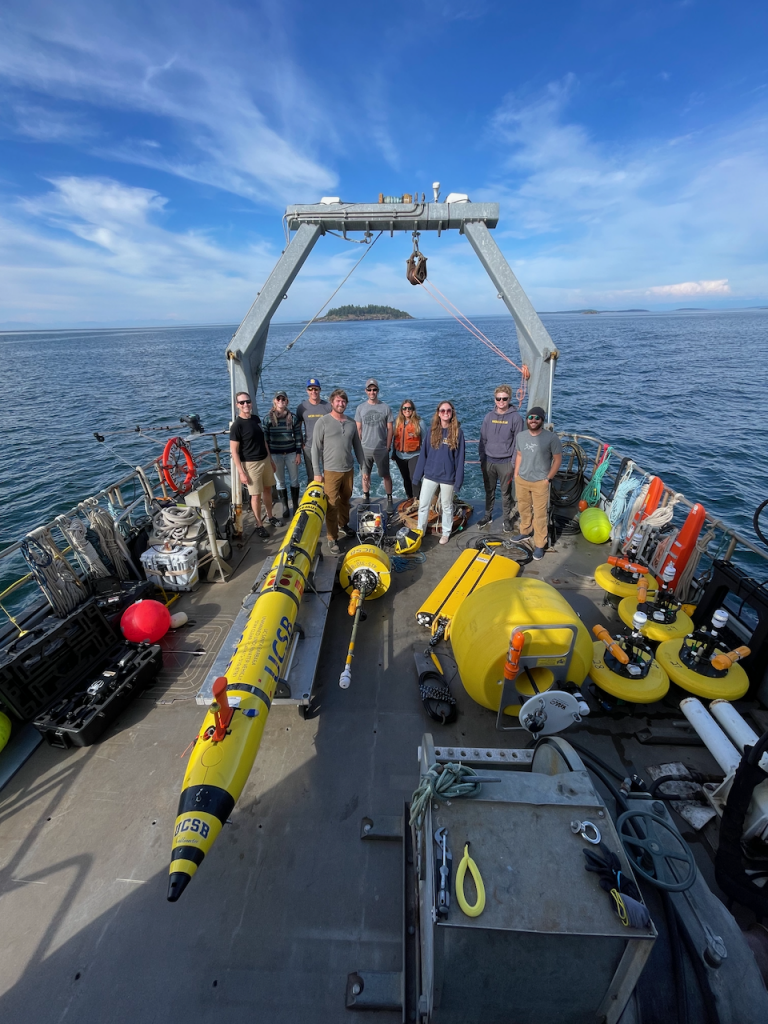
BEACON: The Bellingshausen Sea, A Carbon and Overturning Nexus
The BEACON project will utilize ship-based and autonomous platforms to collect high-resolution physical and biogeochemical data in the understudied Bellingshausen Sea to understand how its circulation drives ice-shelf melting and nutrient distribution. By integrating these observations with advanced modeling, the research aims to fill a critical knowledge gap in how this region influences global sea-level rise, ocean chemistry, and climate predictions for West Antarctica.
Why this matters
The Bellingshausen Sea acts as the “entry point” for warm, nutrient-rich waters onto the West Antarctic shelf. Understanding the submesoscale dynamics here is essential because these waters eventually flow downstream toward the Amundsen Sea, directly impacting the stability of major glaciers like Pine Island and Thwaites.
SBCLTER: Santa Barbara Coastal Long-Term Ecological Research
The Santa Barbara Coastal Long-Term Ecological Research (SBC LTER) program focuses on understanding how land-use changes and ocean climate dynamics influence the structure and function of giant kelp forest ecosystems. Researchers investigate the complex interactions between terrestrial runoff, reef-associated biological communities, and the physical oceanography of the Santa Barbara Channel to track long-term ecological shifts.
Why this matters
Kelp forests are among the most productive ecosystems on Earth, providing` critical habitat for biodiversity and supporting valuable commercial and recreational fisheries. Understanding how these “underwater forests” respond to human activity and a warming ocean is essential for developing effective conservation strategies and ensuring the resilience of coastal economies.
SAMS: Scalable Aquaculture Monitoring Systems
To scale offshore seaweed aquaculture, the industry requires new autonomous monitoring tools that can replace costly, manual surveys of vast deep-water installations. We developed a platform-agnostic, three-dimensional sonar processing technique that accurately quantifies kelp biomass and inspects infrastructure without needing bottom-depth references or complex sensor synchronization.
Why this matters
As the commercial seaweed market expands toward a projected $50 billion valuation, moving farms offshore is necessary for scale but presents significant safety and logistical hurdles. This technology provides the high-resolution data needed for regulatory compliance and operational efficiency, clearing a major technical bottleneck for sustainable ocean-based industries.